The problem
Automatically spot epileptic seizures in 23-channel EEG recordings. Missing a seizure costs more than a false alarm, so recall matters more than precision alone.
My approach
- Filtering50 Hz notch, 0.5 to 30 Hz band-pass, common average reference
- Windows4 s with a 1 s step, labelled seizure if over 60% overlaps a seizure
- FeaturesTime, frequency, wavelets and non-linear dynamics
- ChannelsBoruta keeps the useful channels for each patient
- ModelRandom Forest per patient, threshold tuned for recall
- Time features: variance, kurtosis, interquartile range, line length, Hjorth mobility.
- Frequency features: band power, discrete (db4) and continuous (Morlet) wavelets.
- Signal dynamics: Shannon and permutation entropy, Hurst exponent, correlation dimension.
- One model per patient, because what a seizure looks like varies a lot from one person to another.
Results
- Precision
- 99.5%
- Recall
- 95.3%
- F1 score
- 97.5%
- Accuracy
- 96.63%
- Mean latency
- 1.85 s
- False detections
- 2.29%
- Seizures detected
- 31 / 32
- Patients
- 24
Averages over the 24 patients. Of the 32 seizures in the test set, only one was missed (patient 15). Latency is the time between the start of the seizure and its detection.
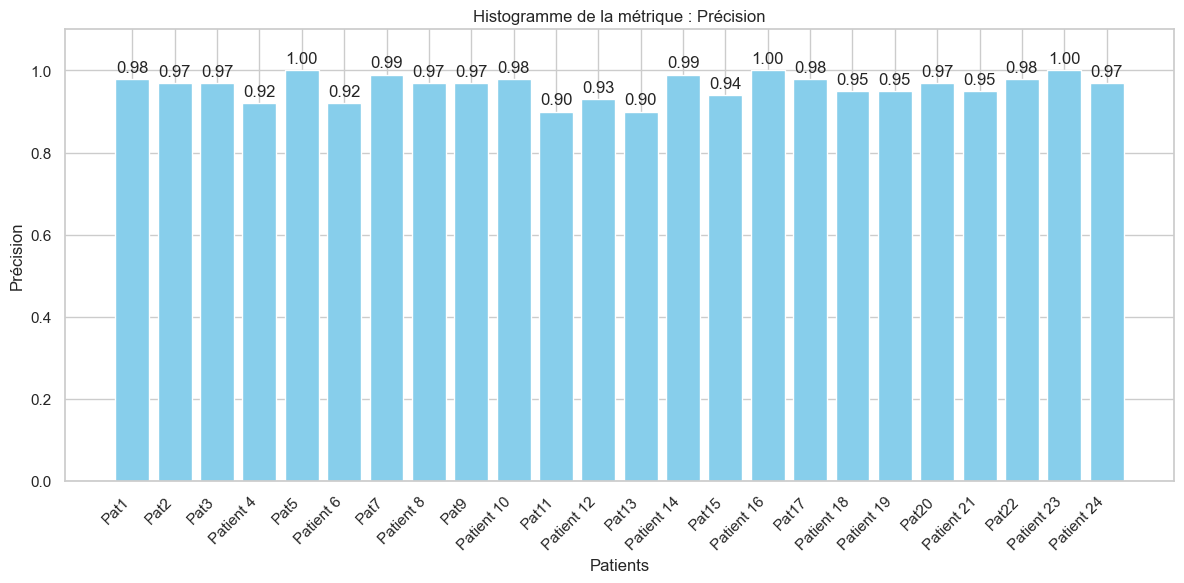
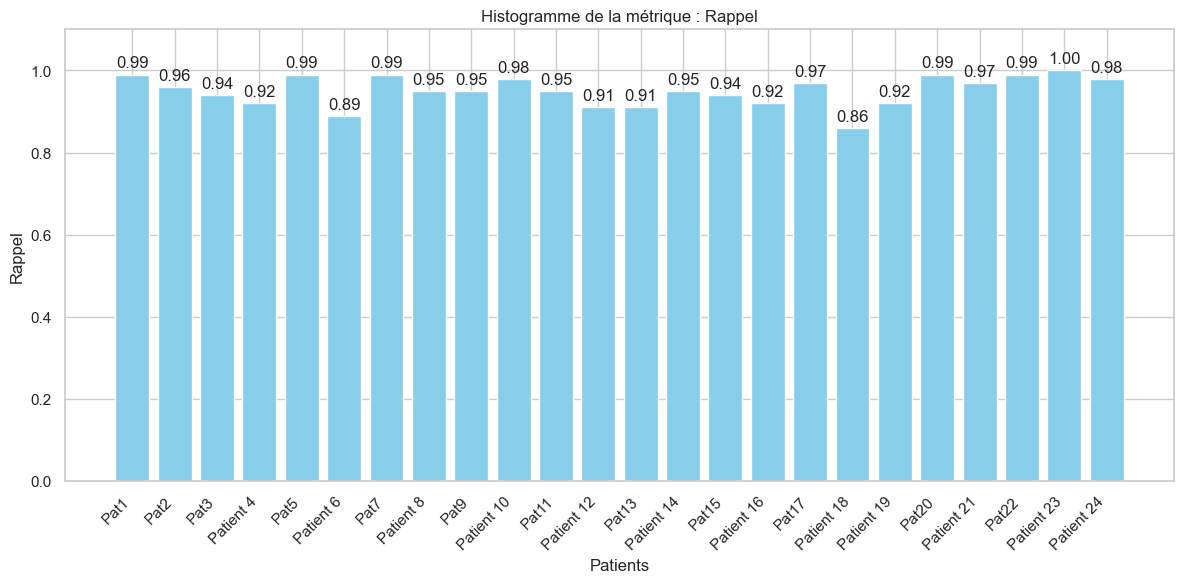
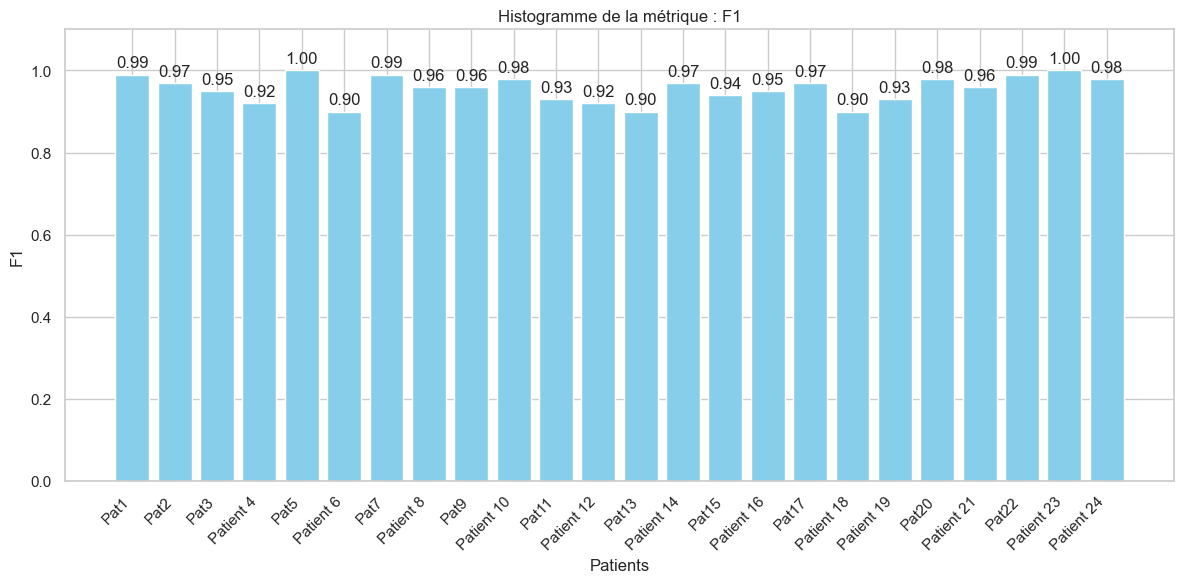
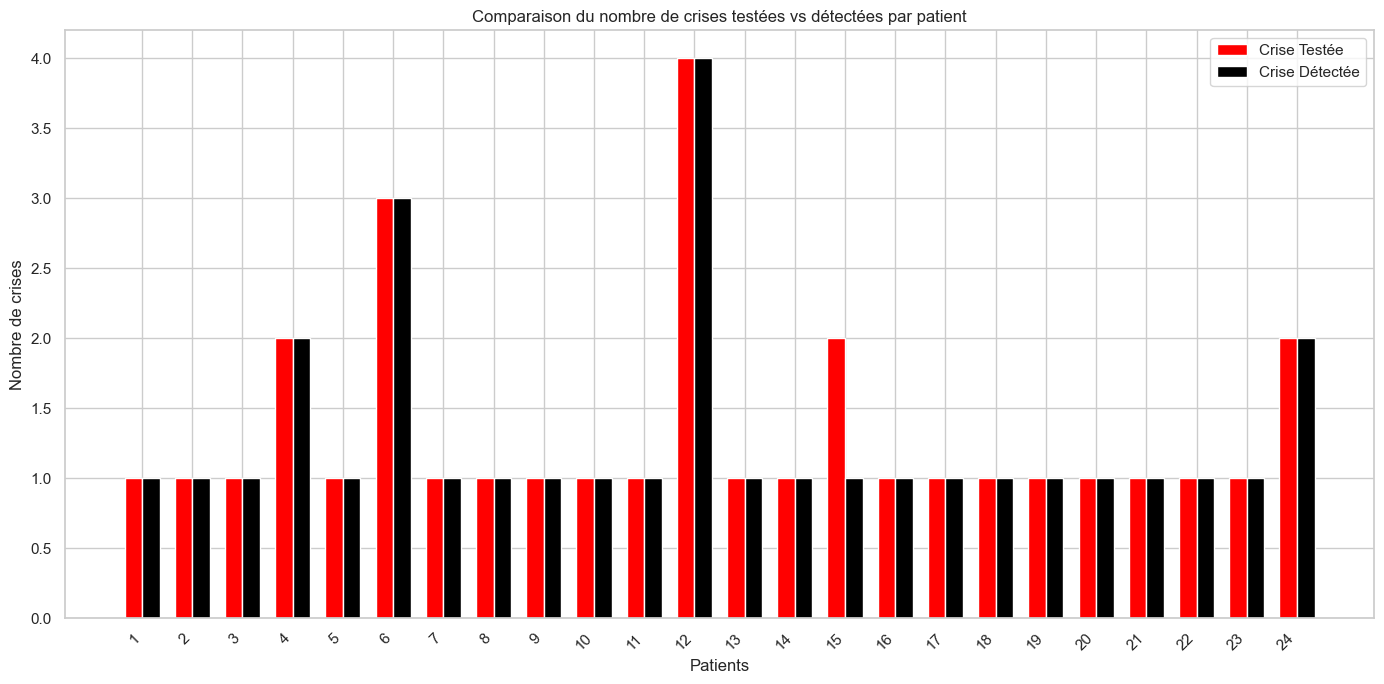
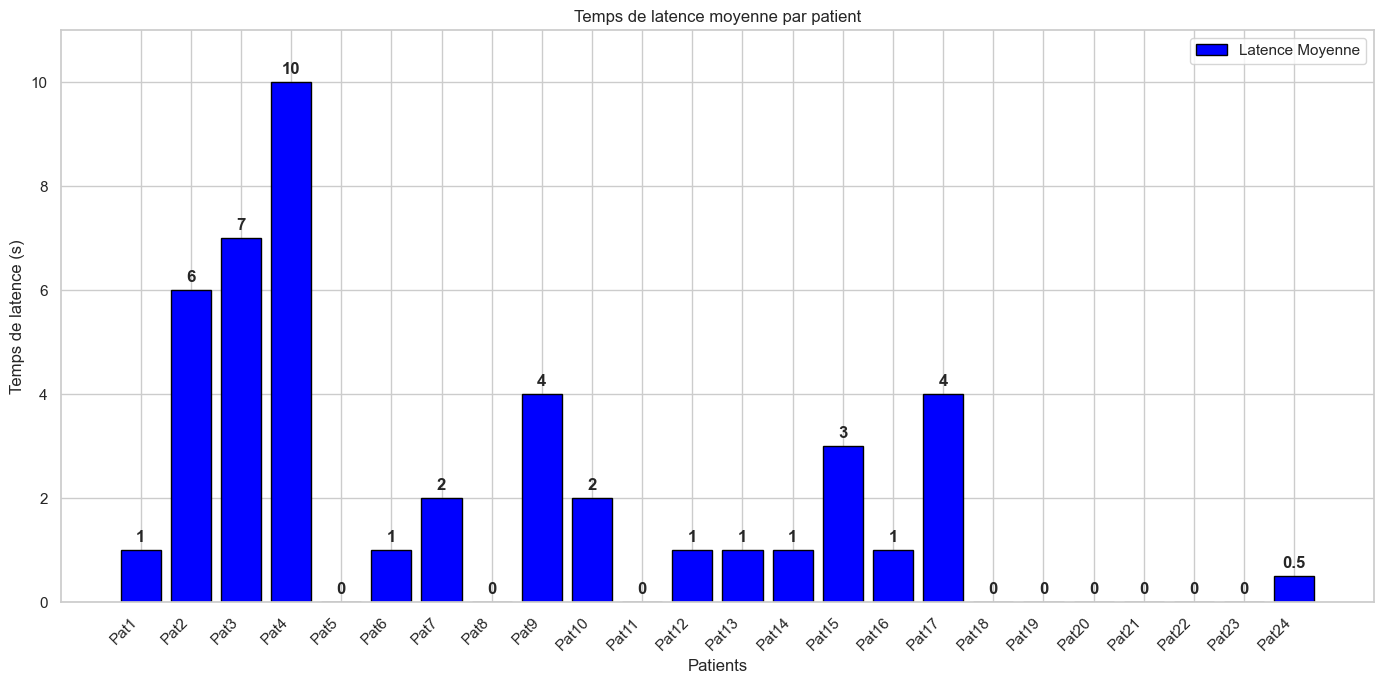
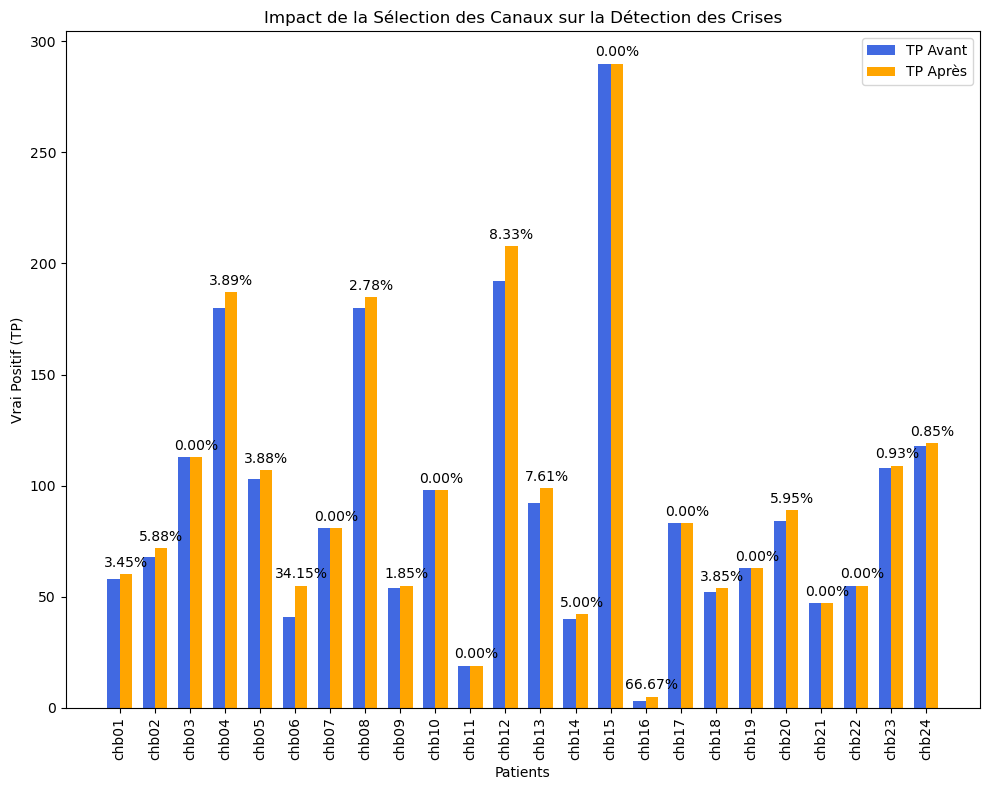
The chart labels are in French, the language of the original project.
Limits
One model per patient, evaluated on files that contain seizures: the results do not carry over as-is to a continuous recording or to a new patient.
The test set holds few seizures per patient (1 to 4): recall therefore rests on a small number of events.
False detections vary across patients: up to 9.5% for patient 13.